فيديو
استهلال / فيديوهات ومنشورات / فيديوهات
AAU 7. 8. The Atlantic route of the Mediterranean: the African-Canarian "necrocorridor"
We resume the sessions of the University Arabic Classroom 7 series with this eighth lecture, given by Mohammed Ouhemmou, professor at Ibn Zohr University in Agadir (Morocco). It will take place on Tuesday, 27 January in Madrid. Come and see it or follow it live on YouTube. The link to the registration form for students of the University Arabic Classroom programme is: https://forms.gle/ueLBhLAdSC6PAqyf8. Only registrations made during the live broadcast of the conference will be counted. This lecture focuses on one of the most deadly corridors in the Mediterranean: the African-Canarian Atlantic route, which can take 1,600 km and several weeks of navigation. If migration corridors in a broader sense refer to the routes taken by migrants, which can be influenced by various factors, including geopolitical, social and environmental conditions, the concept of "necrocorridors" could imply routes that are particularly dangerous or deadly for migrants. This means that not all migration corridors are necrocorridors. Therefore, we are interested in proposing a model that can help us understand the processes of necrocorridor formation. Namely, what are the conditions that make a corridor a particular necrocorridor, and then to contribute to the already broader debate on necropolitics. By highlighting the specificity of the Canary Corridor, we will combine necropolitics with Butler's suggestive theory of grievability to discuss how structural, political and media neglect serve to systematically prevent mourning and remembrance. Also we will take some arguments put forward by global justice debates. The chapter will have three main parts. A more conceptual and theoretical one, in which we will introduce the category of necropolitics and justify why the Canary Island corridor is particularly illustrative. A second part, in which the methodology and data sources will be presented, together with the theoretical model of the necrocorridor that we are trying to construct. And then a third part, more evidence-based, where we will try to propose a model of the necrocorridor using the data and ethnographic information from an empirical study. The basic argument we will put forward is that a necrocorridor is politically constructed and banalised by the same politics that provoke it, together with the media and public opinion. Mohammed Ouhemmou is an assistant professor at Ibn Zohr University in Agadir, Morocco. His fields of interest include public policy analysis, migration and internationalization policies. His research investigates the link between foreign policy and the politics of mobility. He has published a number of articles on international mobility and migration policies in Morocco and North Africa, including “Tense Neighbors, Algeria and Morocco Have Divergent Migration Histories” (2023), “Migration, Governance and Geopolitical Conflicts in Africa: A Comparative Analysis of Moroccan Algerian Migration Policies” (2021), “Moroccan Migration and Integration Policy: The Intersection of Culture and Public Policy Making” (2020), and “Comparative Analysis of Migration Policies and Social Transformations in the MENA Region” (2020). Mr. Ouhemmou is also interested in policies of educational mobility from sub-Saharan Africa into Morocco and he particularly focuses on how African students in Moroccan universities navigate symbolic and social borders. Further information: https://en.casaarabe.es/eventos-arabes/show/the-atlantic-route-of-the-mediterranean-the-african-canarian-death-corridor Image: Salvamento Marítimo (https://www.salvamentomaritimo.es/sala-de-comunicacion/multimedia/cayucos-y-pateras)
البحث عن مقاطع الفيديو
1. محاضرات ونقاشات
-
Día de la Lengua Árabe: "Las calles hablan árabe"
نشرت 19 ديسمبر 2020 -
La diplomacia económica en Marruecos (ESPAÑOL / ÁRABE)
نشرت 13 فبراير 2020 -
International Arabic Language Day (Arabic)
نشرت 17 يوليو 2019 -
Libya: What are its prospects after seven years of conflict?
نشرت 05 ديسمبر 2018 -
كل لقطات الفيديو
2. كتب ومنشورات
-
Presentación de Banipal nº2
نشرت 27 اكتوبر 2020 -
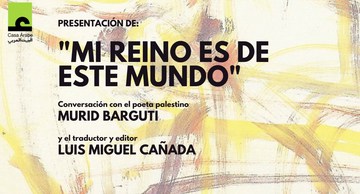
Presentación de "Mi reino es de este mundo", de Murid Barguti
نشرت 09 اكتوبر 2020 -
Encuentro con el escritor Amin Maalouf en Casa Árabe (FRANCÉS)
نشرت 30 اكتوبر 2019 -
“Yogurt with Marmalade: Or how my mother became Lebanese” (ARABIC)
نشرت 05 ديسمبر 2018 -
كل لقطات الفيديو
3. مهرجانات
-
¡Expulsion!– dance riot (Work in Progress)
نشرت 11 ديسمبر 2020 -
Concierto "Nostro Mare"
نشرت 28 اكتوبر 2020 -
Concierto "Sueños de al-Ándalus"
نشرت 09 اكتوبر 2020 -
Concierto "Madar", los nuevos sonidos de Oriente
نشرت 10 سبتمبر 2020 -
كل لقطات الفيديو
4. معارض
-
Exposición "Hassan Fathy: a contracorriente"
نشرت 16 فبراير 2021 -
Exposición "Arcadia Arábiga", de Jordi Esteva
نشرت 01 اكتوبر 2020 -
Exposición "Desplazamientos. Diásporas de Yemen"
نشرت 23 سبتمبر 2020 -
Inauguración virtual de la exposición “Desplazamientos. Diásporas de Yemen”
نشرت 23 سبتمبر 2020 -
كل لقطات الفيديو
5. دروس وندوات
-
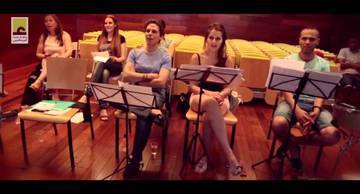
Escuela de Música Árabe-Flamenco de Casa Árabe
نشرت 22 يوليو 2014 -
كل لقطات الفيديو
6. برامج خاصة
-
Ramadán 2023: Concierto de Marwán
نشرت 17 يوليو 2023 -
Exposición "Arenas movedizas"
نشرت 17 يوليو 2023 -
Concierto "Steps", por Layth Sidiq y Vasilis Kostas
نشرت 02 يناير 2023 -
Lost / Retorno a Beirut
نشرت 28 ديسمبر 2022
-
Concierto de Faraj Suleiman Trio
نشرت 20 ديسمبر 2022 -
Daby Touré en concierto
نشرت 22 يوليو 2022 -
Exposición "Luces o 'sombras' de lo que fue y sigue siendo"
نشرت 19 يوليو 2022 -
Al-Tanki, in the Footsteps of an Iraqi Woman (ARABIC)
نشرت 26 مايو 2022
-
Exposición "Memorias en movimiento. Arte contemporáneo de Mauritania"
نشرت 08 مارس 2022 -
The Historical Figure Wallada: Poetry and freedom (ARABIC)
نشرت 22 فبراير 2022 -
Concierto "Sonore al-Ándalus"
نشرت 29 سبتمبر 2021 -
Concierto de Driss El Maloumi y Andreas Prittwitz Quartet (clip)
نشرت 14 سبتمبر 2021